
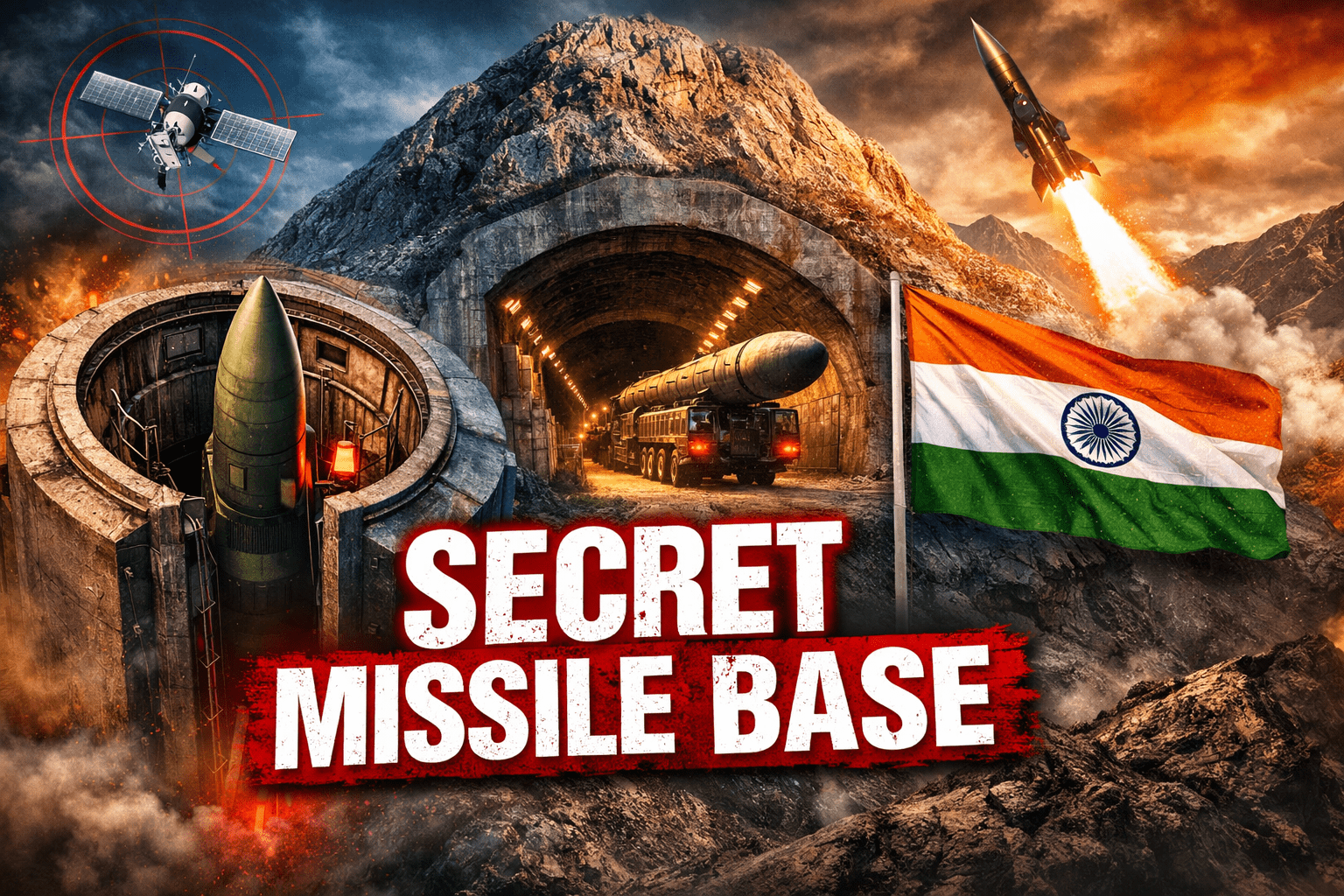
India’s expanding missile infrastructure has become a major topic in global defense and geopolitical analysis. In recent years, multiple defense observers and satellite imagery assessments have suggested the development of underground missile facilities and mountain-based tunnels across strategic regions of India.
These developments are widely analyzed in the context of regional security dynamics involving South Asia and the Indo-Pacific, particularly concerning India’s strategic posture toward neighboring states such as Pakistan and China.
This article presents a research-based overview (updated to 2025) of locations frequently cited in defense discussions, relying on open-source intelligence (OSINT), satellite analysis, and publicly available defense assessments.
Why Underground Missile Infrastructure Matters
Underground missile facilities provide several strategic advantages:
-
- Enhanced survivability against first-strike scenarios
- Greater concealment from satellite and aerial surveillance
- Improved second-strike capability
- Strategic deterrence signaling in contested regions
For global investors, policymakers, and security analysts, these developments directly affect regional stability, defense spending trends, and international alliances—topics that consistently attract high-CPM advertising.
-
Key Alleged Underground Missile Facilities in India
Jangalapalle, Andhra Pradesh
Defense analysts frequently reference Jangalapalle as a suspected underground missile complex located approximately 300 km inland from India’s eastern coastline.
Satellite imagery reportedly reveals:
-
- Multiple tunnel entrances
- Extensive underground excavation
- Hardened storage structures
The site is commonly associated with Agni-series ballistic missiles, forming part of India’s long-range deterrence architecture.
Naval Underground Infrastructure Near Kakinada
A naval installation near Kakinada, Andhra Pradesh, is believed to include underground submarine pens and missile storage areas. Completed around 2025, this facility is often linked to India’s sea-based nuclear deterrent strategy.
Maritime analysts suggest such infrastructure strengthens India’s second-strike capability in the Bay of Bengal and the wider Indo-Pacific region.
Andaman and Nicobar Islands: Strategic Outpost
The Andaman and Nicobar Islands occupy a crucial geostrategic position near the Malacca Strait, one of the world’s most important maritime trade routes.
Defense discussions indicate potential plans for:
-
- Hardened underground missile silos
- Ballistic Missile Defence (BMD) support systems
If operationalized, these installations could significantly impact regional naval balance and global trade security, making them of high interest to international audiences.
-
-
-
Missile Tunnels in India’s Mountain Regions
-
-
Himalayan Missile Tunnel Network
Reports suggest that in regions such as Arunachal Pradesh, Sikkim, and Ladakh, India has developed mountain tunnels capable of storing and potentially launching long-range missile systems, including Agni-V ICBMs.
These tunnels are reportedly:
-
- Camouflaged within mountainous terrain
- Connected to logistics and transport corridors
- Designed for rapid missile mobility and concealment
Tactical Missile Storage in Border States
In border areas including Assam, Jammu & Kashmir, and Arunachal Pradesh, multipurpose tunnels are believed to store short-range and tactical missile systems such as BrahMos and Prithvi.
Construction reportedly began around 2022, with several sites reaching operational readiness by 2025.
Railway-Based Missile Mobility
One of the most discussed strategic concepts involves the use of railway tunnels under mountainous regions to conceal rail-based missile platforms, such as Agni-Prime.
Military analysts note that rail-mobile missile systems:
-
- Increase deployment flexibility
- Reduce detection probability
- Enhance deterrence through unpredictability
The Sela Tunnel: Dual-Use Potential
Officially presented as a high-altitude transportation project, the Sela Tunnel in Arunachal Pradesh has drawn analytical attention due to its potential dual-use military logistics capability.
While primarily civilian in nature, its strategic location near contested borders has led analysts to assess its possible role in military mobility planning.
Strategic Forces Command & Defense Policy Context
Most of these facilities are believed to fall under India’s Strategic Forces Command (SFC) and align with broader defense modernization and self-reliance initiatives.
From a global perspective, these developments are closely watched due to:
-
- Rising defense budgets in Asia
- Western defense partnerships
- Shifting power balances in the Indo-Pacific